
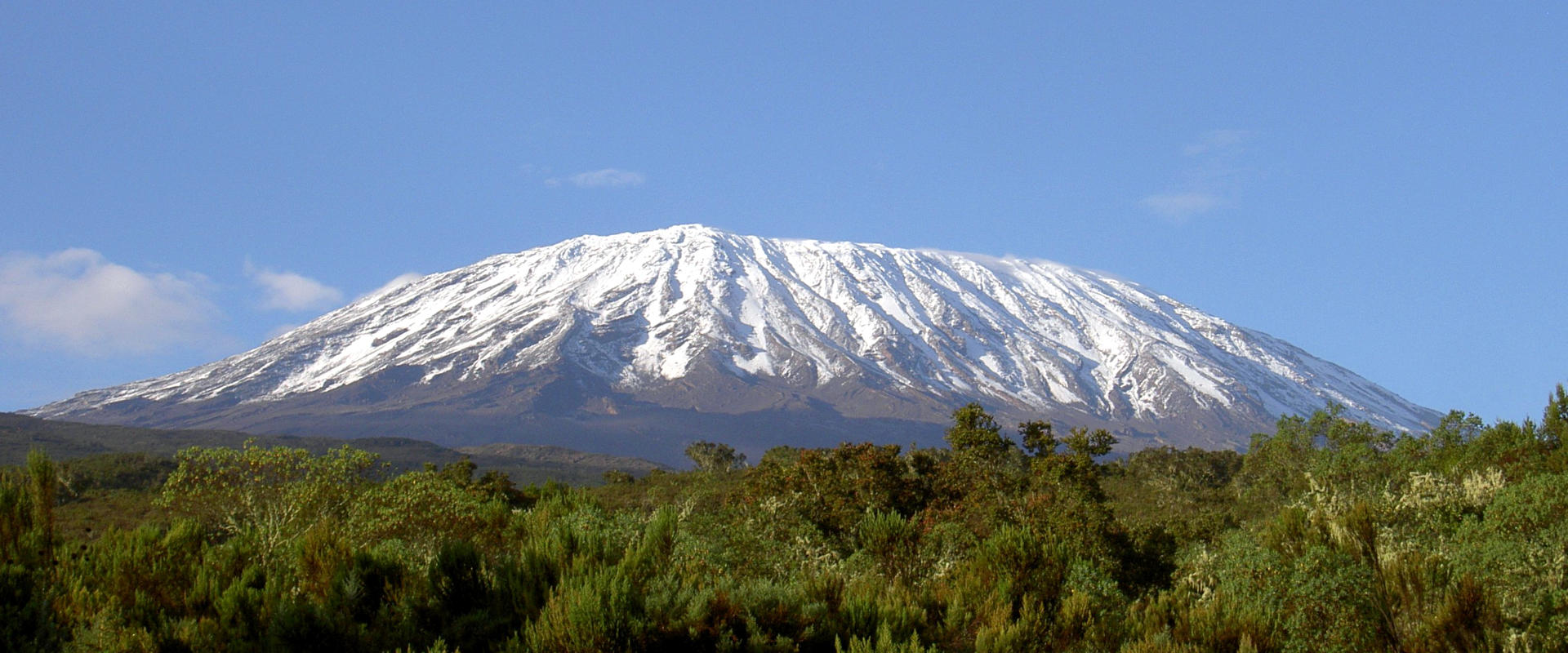
Do you know that Kilimanjaro National Park houses the highest free-standing mountain in the world and the tallest mountain in Africa? The name of this mountain is Mount Kilimanjaro. They are composed of three volcanoes: Shira (4,269 m) in the west, Mawenzi (5,280 m) in the east, and the youngest volcano Kibo (5,895m). While Shira and Mawenzi are extinct, Kibo is dormant, and last erupted between 150,000 and 200,000 years ago. However, it could awaken at any time.
The park is also home to a diverse range of vegetation, with over 2,500 plant species found here, including the endemic and stunning red and yellow impatiens Kilimanjaro and the colorful violet viola. The lower regions of the park are covered in lush green montane forests, dominated by almost 140 species of trees. As you climb higher, you'll see distinctive giant lobelias in the moorland zone. Above 4,000 m, the terrain becomes more barren, resembling a moonlike desert with rocks and dust. But as you approach the summit, you'll be rewarded with breathtaking views of glaciers and a deep crater.
The Kilimanjaro National Park is home to around 140 mammal species, out of which 87 are forest species. The park is inhabited by a diverse range of animals, including elephants, leopards, buffaloes, different types of antelopes (including the rare and endangered abbot duiker), and primates such as the colobus and mitis monkey—additionally, the park functions as a natural environment for various species. Diverse wildlife. This includes 24 distinct bat species and 179 highland bird species.
Most visitors to the park come here to hike to the top of Africa's highest peak. The park offers seven official routes, with Marangu being the most accessible and most comfortable route, ideal for inexperienced hikers. The Rongai route is the quietest and best suited for climbing during the rainy season, as it receives the least precipitation. The Lemosho, Shira, and Machame routes offer camping options and are more challenging but also more scenic. The Umbwe route is the most demanding and least used. All other trails descend on the Mweka route except for Marangu and Rongai.